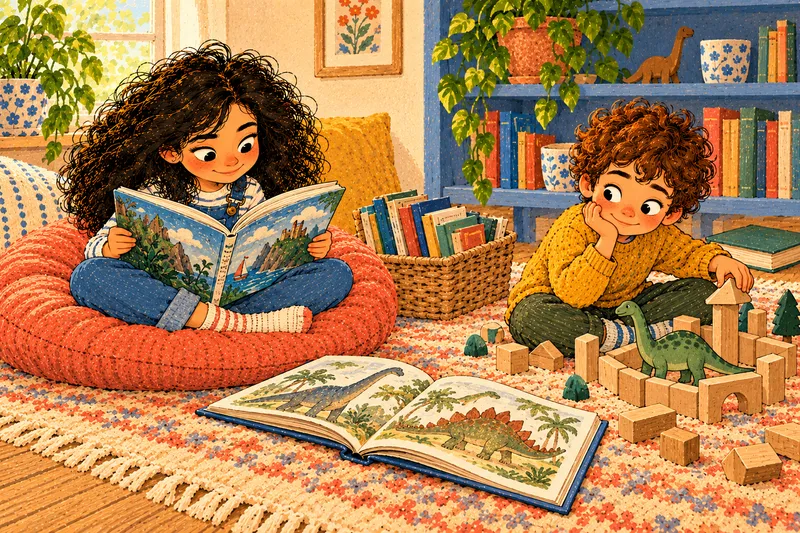
When a child avoids books, the bookshop becomes a minefield. Every shelf is full of things they might reject. So we play it safe and choose what's recommended, what's at the right level, what other children seem to like. And it often doesn't work.
When I write for young readers, the question I ask is never “Is this at the right level?” It's “Will they want to turn the page?” That's the question worth asking in a bookshop too.
Start with the hook, not the level
Every reluctant reader has something that makes them lean forward: a sport, an animal, a game, a fear, a joke. Find books built around that, and worry about the level afterwards.
Five questions to ask about any book
- Does something happen on the first page?
- Are the chapters short enough to finish in one sitting?
- Is there white space, pictures or dialogue to rest the eyes?
- Would my child laugh, gasp or argue with it?
- Is it about something they already care about?
Three yeses is usually enough to try it.
Shapes of book that often work
- Comics and graphic novels
- Joke books and “would you rather” books
- Short chapter books with illustrations
- Non-fiction about one obsession: sharks, space, football, volcanoes
- Books with a mystery from the very first page
- Books from a film or game they already love
All of these count as reading. All of them build the same skills.
The right book for a reluctant reader is rarely the “right” book. It's the one they can't resist.
Let them choose, then step back
Take them to a library, where nothing has to be bought and nothing is a waste. Give them a time limit and a bag. Say nothing about what goes in it.
Once you've found the book: 5 Ways to Help a Reluctant Reader Finish It
What to Do When Your Child Says “Reading Is Boring”
What's the one book that finally worked for a reluctant reader you know? Leave it in the comments. These answers help more parents than any list I could write.
I read, I choose, and I write about the books that stay with me. I also write The Keeper Chronicles.
Raising readers, one week at a time.
Once a week: a short personal note, one article about reading or family life, one practical idea to try, and a question you can answer just by replying. One email a week, never a sales pitch.
No comments yet. Be the first to say something.