Every guide to starting a family book club I found assumed two things: four children who already love reading, and a parent with a spreadsheet. That was never going to be us. If it isn't you either, this one's for you.
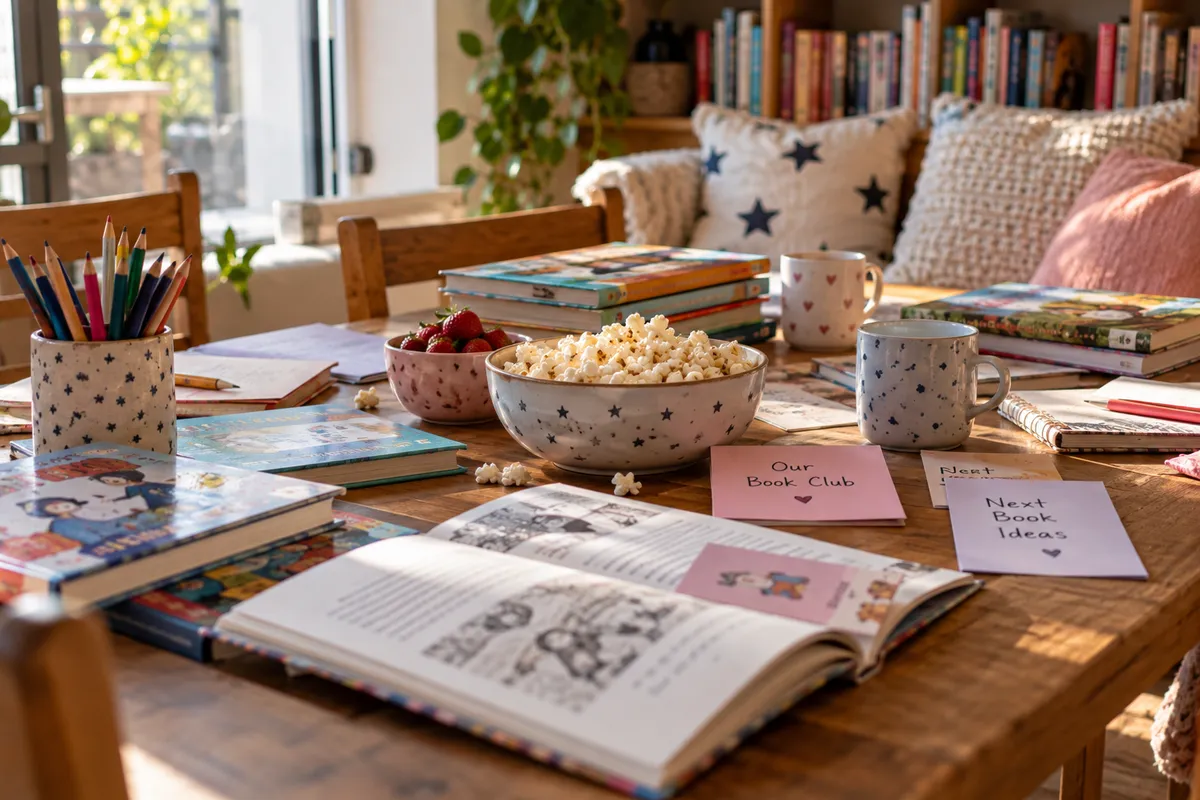
One child and one adult is a book club
You don't need a group chat, a reading schedule or snacks with a theme, although snacks help more than any guide admits. You need two people reading the same book at roughly the same pace, and a moment, once a week or once a night, when you talk about it as if it matters.
It will feel too small to count. Count it anyway. Small is the version that survives a busy Tuesday.
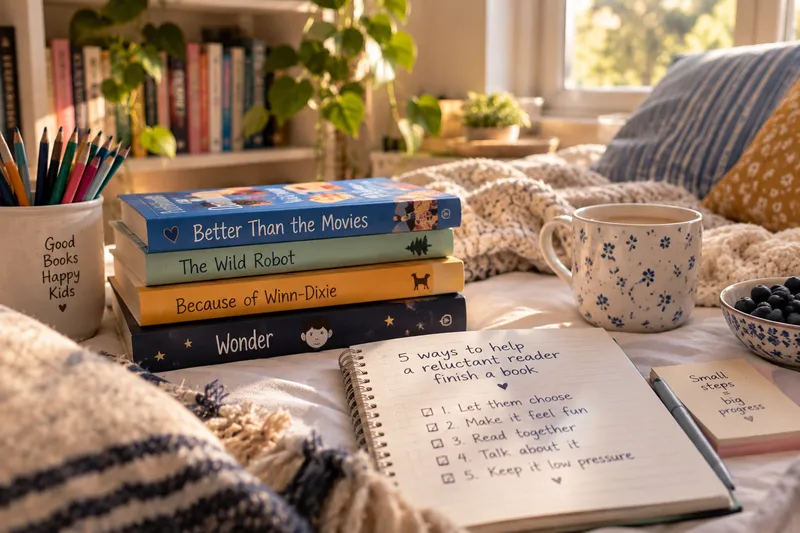
Let them choose the book
The quickest way to end a book club before it starts is to choose the book yourself and announce it. Let them veto. Let them pick something you would never have picked, even something you privately think is a bit silly. Choosing is what makes it theirs, and a book they chose will get further than a better book they were handed.
Children seem to agree. In Scholastic's surveys of families in Australia, most children said they were more likely to finish a book they had picked out themselves.
What it looks like at different ages
5 to 7: a read-aloud club
The adult reads, the child chooses and listens. Picture books and short chapter books. One question at the end, often a silly one: which character would you invite to dinner, and what would you cook?
8 to 10: taking turns
Short chapter books, comics, funny series. Take turns reading pages aloud, or read separately and meet to talk. Let them catch you not knowing what happens next.
11 to 13: let them lead
Graphic novels, mysteries, books from the films and games they love. Let them pick, set the pace and ask the questions. Treat their opinion of a book as a real review, because it is one.
Talk about it away from the table
Dinner turns every question into an interview. A walk, a car journey, the five minutes before lights out: that's where a child will tell you what they really think of a character. Ask what they'd have done in the character's place, not what happened. The first question has no wrong answer, and that's why it works.
- Let them choose the first book, or at least veto yours
- Keep the pace small: one chapter a session, never a deadline
- Talk somewhere that isn't the dinner table
- Ask what they'd do differently, not what happened
- End each session on one question for next time
Your first session, step by step
- Before: offer three or four books, or a library trip, and let them choose
- Read one chapter, together or separately
- Talk for five minutes somewhere relaxed: a walk, the car, the sofa
- Ask one question with no wrong answer, and answer it yourself too
- Agree on the next chapter and the next moment, then stop
When it stalls
It will. Someone gets ill, school gets heavy, a book turns out duller than its cover. Don't announce a restart. Leave the next book somewhere they'll find it, and ask a question about it when nobody's expecting one.
More on evenings together: The Night I Realized We Were All Home, but Not Really Together
For older children and teens, if you want a first book with a question built into page one, this is the one I wrote for exactly that.
Raising readers, one week at a time.
Once a week: a short personal note, one article about reading or family life, one practical idea to try, and a question you can answer just by replying. One email a week, never a sales pitch.
Start tonight with one book and one child, and see whether it's still going in a month. The book clubs that last are usually the ones nobody turned into a project.
I read, I choose, and I write about the books that stay with me. I also write The Keeper Chronicles.
A question for you
What's a book your child chose that you would never have picked? Did it surprise you?
Answer in the comments below, or simply reply to the Weekly Letter. I read every answer.
No comments yet. Be the first to say something.