Books Worth Your Time
Every selection, week by week
5 weekly selections so far. Each book has its own page, with why it was chosen and who it might suit.
19–25 October 2026This week
Good Inside
Becky Kennedy
Good Inside is here because it is one of the parenting books people keep coming back to, years after it came out, and because its starting point is a kind one: children are good inside, even when their behaviour isn't. Becky Kennedy writes for parents who are tired of reward charts and time-outs that don't seem to change much. She asks for something harder and gentler at the same time, which is to stay steady and connected while still holding the limit. Much of the book works through specific moments, from tantrums and sibling rivalry to separation anxiety, which makes it easy to dip into.
The Very Hungry Caterpillar's Peekaboo Halloween
Eric Carle
For the smallest readers, Halloween can be a lot: masks, noises, things that jump out. This board book keeps it gentle. Page after page, The Very Hungry Caterpillar is hiding somewhere among autumn leaves, bats and jack-o'-lanterns, and a short rhyme asks the child to find him. That turns reading into a game they can win, again and again, which is exactly what toddlers want from a book. It is shaped like a pumpkin and sturdy enough for small hands, in Eric Carle's familiar bright style.
Lots of Knock-Knock Jokes for Kids
Whee Winn
A joke book on a reading list may look like a cheat. I don't think it is. For a child who avoids books, short jokes are often the easiest way in: every page is finished in seconds, there is a reward at the end of each one, and the whole point is to read it aloud to someone else. This collection has more than 250 jokes, riddles and tongue twisters, all clean, so it works in the car, at dinner or in a waiting room. It has spent seven weeks in Amazon's weekly top 20 of nonfiction sales, which says a lot about how many families reach for it.
Partita
Barbara Kingsolver
Partita is the new novel from Barbara Kingsolver, the author of Demon Copperhead, and it went straight into Amazon's most sold fiction chart in its first week. Livia Cable has made her peace with her marriage in the farm country where she grew up when a phone call from an old lover brings back the years she spent as a young pianist at a music conservatory. The novel moves between those two lives, with memories framed as musical dances. It is a book about the paths we don't take, and about what art means to people who had to choose something else.
East of Eden
John Steinbeck
East of Eden is back on Amazon's most sold fiction chart more than seventy years after it was published, because a new Netflix series has sent readers back to it. It follows two families, the Trasks and the Hamiltons, across generations in California's Salinas Valley, and retells the story of Cain and Abel as a story about fathers, sons and the longing to be loved. It is long and sometimes brutal, but its central idea is hopeful: that people can choose who they become. A good season for a big book, and an easy one to talk about.
Previous selections
12–18 October 2026
Room on the Broom
Julia Donaldson, illustrated by Axel Scheffler
I chose Room on the Broom for this week because October is when witches start turning up at bedtime, and this one is kind rather than scary. The wind keeps stealing the witch's things, and every animal who brings something back asks for a seat on her broom. The rhyme does most of the work, with a question that comes round again and again, so small listeners can join in long before they can read. Underneath it is a quiet story about always making room for one more.
The Whole-Brain Child
Daniel J. Siegel and Tina Payne Bryson
This is here because, more than ten years after it came out, it is still among the parenting books people buy most, and its ideas are simple enough to remember in a difficult moment. Siegel and Bryson explain children's reactions with plain images, like the 'upstairs' and 'downstairs' parts of the brain, and pair each one with something to try. It doesn't promise calm children. What it offers is a way to understand what might be happening before you decide what to say.
The Anxious Generation
Jonathan Haidt
I'm including The Anxious Generation because it sits right beside what ALMA keeps coming back to: screens, attention and evenings at home. Haidt argues that childhood moved from play to phones in the early 2010s and connects that shift to rising anxiety among teenagers. Some researchers question how strong that connection is, and it is worth reading with their doubts in mind. His proposals, among them later smartphones and more unsupervised play, are concrete enough to talk through as a family.
Project Hail Mary
Andy Weir
This one has spent a long time on Amazon's most sold fiction chart, and it is one of the few adult novels that suits a curious teenager just as well. A science teacher wakes up alone on a spaceship with no memory of how he got there, and has to work out, one problem at a time, what he is doing so far from home. The science is the enjoyable kind, solved out loud and often with humour. It is now a film too, so a family can read it and then argue about the adaptation.
Hollow Bones
Jodi Picoult
I picked Hollow Bones because it is Jodi Picoult's new novel and because its question suits this season of letters: how far we go to protect the people we love. Molly lost her mother on September 11, when she was two months old, and grew up with a steady fear of disaster that she now turns into her job, planning emergency responses. What happens to her new marriage is the part the publisher keeps quiet about, so I will too. Picoult usually builds her novels around a moral dilemma, which makes this a good choice for a book club.
5–11 October 2026
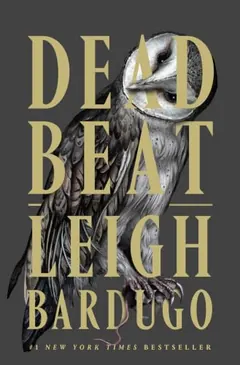
Dead Beat
Leigh Bardugo
The third Ninth House book: Alex Stern and her allies are up against demons loose in New Haven and on the Yale campus. Dark, clever and properly unsettling. New to the series? Start with Ninth House.
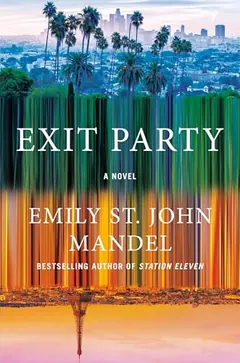
Exit Party
Emily St. John Mandel
Los Angeles, 2031, the first spring after America's collapse. A man vanishes from a glittering party, a double turns up in his place, and Ari Waker starts pulling at a night that makes less sense the closer she looks.
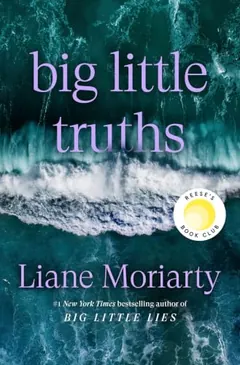
Big Little Truths
Liane Moriarty
The sequel to Big Little Lies, and it works even if you never read the first one. A stranger turns up at a school, and things that were never said start coming out.
6–12 September 2026
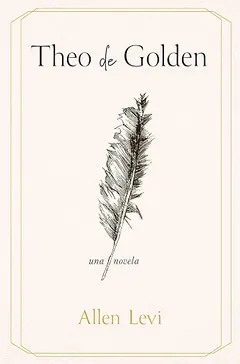
Theo of Golden
Allen Levi
A stranger arrives in a small Southern town and starts buying the pencil portraits hanging in the coffeehouse, one for one story each. Quiet, generous, unlike anything else on the list.
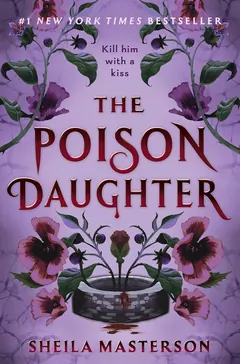
The Poison Daughter
Sheila Masterson
Her kiss kills, and she's used it as a weapon against cruel men for years. Then her arranged marriage turns out to be the one man it doesn't work on.
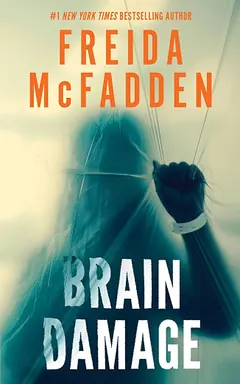
Brain Damage
Freida McFadden
A doctor is shot in the head and survives, but the memory of who did it is trapped somewhere in the damaged half of her brain. She has to find it before he finishes the job.
16–22 August 2026
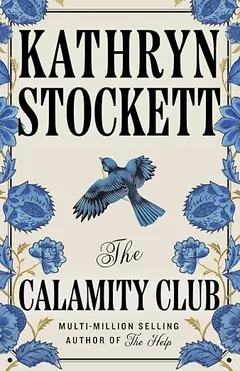
The Calamity Club
Kathryn Stockett
A secret brothel run as a rescue mission, in Depression-era Mississippi. Sharp, aching, impossible to put down.
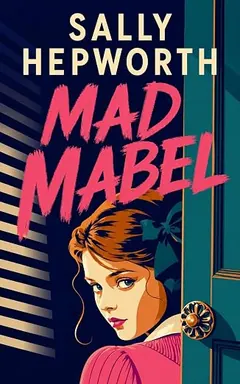
Mad Mabel
Sally Hepworth
An 81-year-old with a hidden past becomes a murder suspect. Equal parts hilarious and heartbreaking.
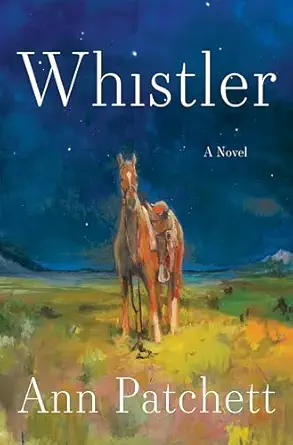
Whistler
Ann Patchett
Two people who loved each other briefly, forty years ago, get one more chance. Patchett doing what she does best.